ServicesReverse Osmosis
Reverse Osmosis in Temple Terrace
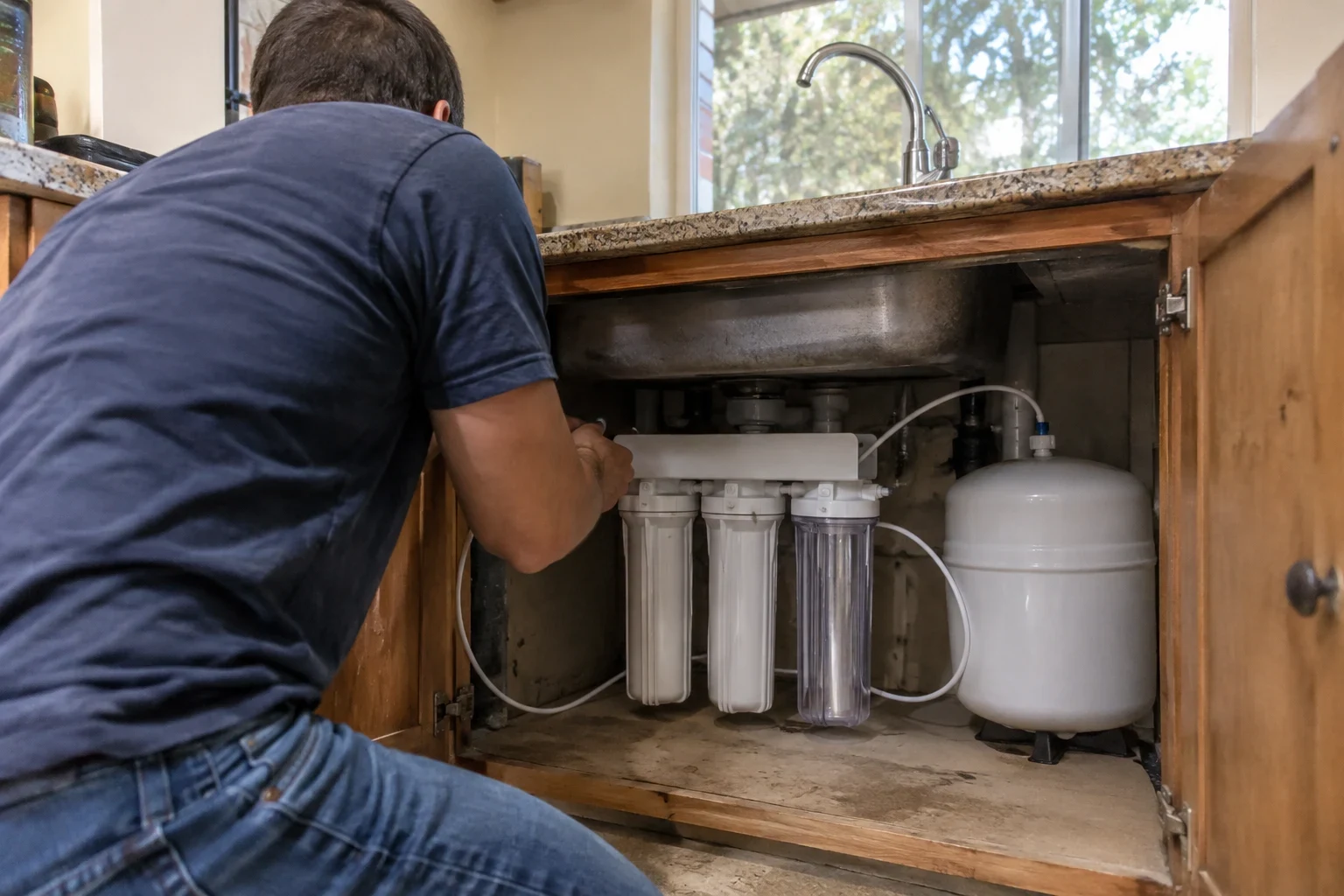
We install a reverse osmosis system in the cabinet below your sink, so drinking and cooking water comes from a small faucet of its own. Before we drill a hole or cut a line, you get the system, the parts and every price factor on paper to read over.
Filtered Water for the Glass and the Pot
Reverse osmosis pushes tap water through a membrane with openings far smaller than a grain of salt. Minerals, metals and other dissolved solids get rinsed off to the drain. The clean side feeds your glass, your coffee pot and your ice.
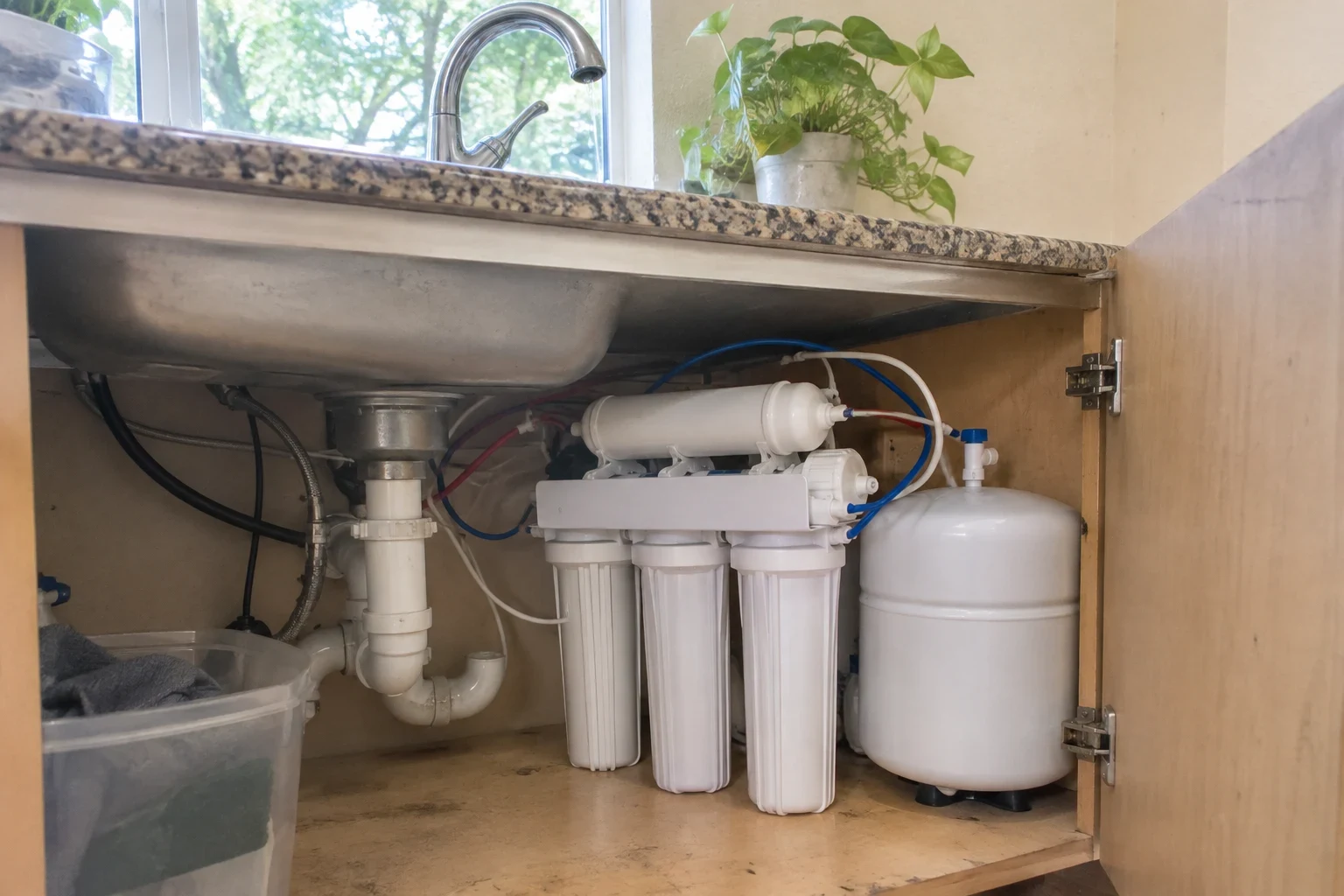
RO treats water at one spot, not the whole house. The unit lives in the cabinet below the kitchen sink and supplies its own small faucet, and sometimes the fridge. The shower and the washing machine still get regular tap water. If you want better water at every tap, look at our Whole-Home Filtration page. Plenty of people end up with both: a carbon system for the whole house and RO at the kitchen sink.
RO is a good call if you are buying bottled water every week, if you live in an older home and worry about what the pipes add, or if you just want one more step between the tap and your glass.
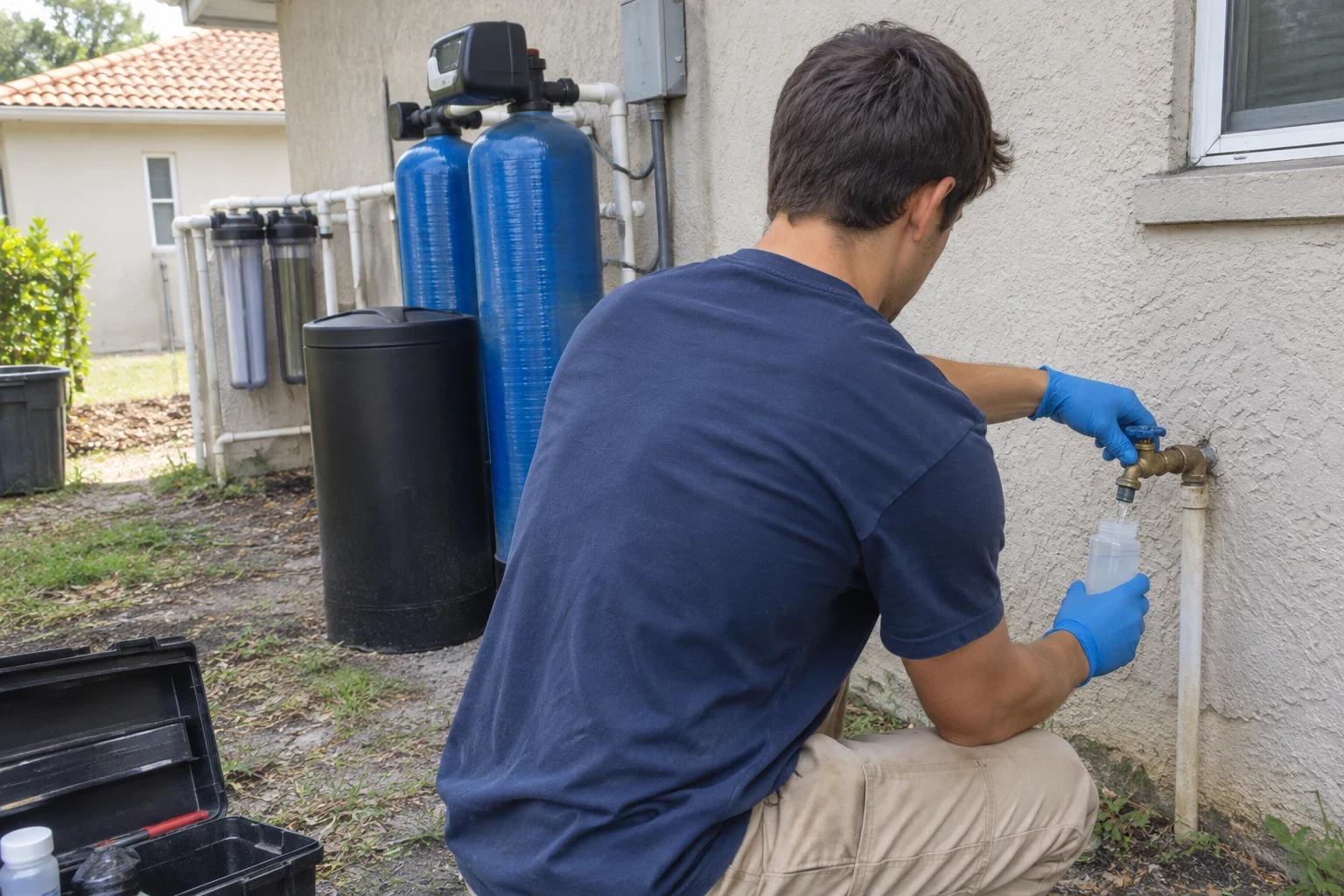
What an RO Install Includes
- 01
Prefilters that protect the membrane
A sediment filter catches grit and rust flakes. A carbon filter takes out chlorine, which would otherwise wear down the membrane over time.
- 02
The membrane and storage
Tank systems store a few gallons in a pressurized tank under the sink so you can fill a pitcher fast. Tankless units make water on demand and need a power outlet nearby. We tell you which fits your cabinet.
- 03
A dedicated drinking faucet
We mount a separate faucet next to your kitchen faucet. If your sink already has a spare hole or a soap dispenser we can use, we will. Otherwise we drill one, using the right bit for stone, quartz or steel.
- 04
Drain and feed connections
We tap the cold line with a shutoff valve and connect the drain line with a proper drain saddle, so waste water leaves cleanly and can't back up into the system.
- 05
Optional fridge hookup
Your refrigerator's ice maker and water dispenser can draw from the RO too. We route tubing from the sink to the fridge, and the length and path are listed up front.
- 06
A filter schedule you can keep
We label each filter with its install date and show you when each one needs changing. We also offer ongoing customer support for maintenance, filter replacements and service needs.
Questions about Reverse Osmosis?
Call(813) 798-6672Signs RO Makes Sense for You
Hauling cases of bottled water
If bottles fill your pantry and your recycling bin, a small faucet at the sink does the same job without the store runs.
Coffee, tea or ice tastes off
A pool smell or a flat, odd taste in drinks often comes from treatment chemicals and dissolved solids. RO with a carbon stage handles both at the kitchen tap.
Older plumbing in your home
Water can pick up metals like lead from old pipes and fixtures after it leaves the utility. RO is one of the better ways to reduce that at the place you drink from.
An old RO that drips or runs slow
A system that takes forever to fill a glass, hums or drips may need new filters or a new membrane. If the unit itself is worn out, our Water Softener & Filtration System Replacement page covers swapping it.
You want extra assurance
Your utility's water may meet every rule and you still want one more barrier for the water your kids drink. That is a fair reason, and RO is built for it.
From First Call to First Glass
- 1
We talk it over by phone
Let us know what bugs you about the water and what is stored below the sink right now. We'll ask about spare faucet holes, your countertop material, the disposal and whether the fridge should be hooked up.
- 2
You get it in writing
The quote lists the system, the faucet, any extra lines or a booster pump, and labor. Nothing gets added on the day that is not on that paper.
- 3
Install day
We shut off the cold water, clear a spot, and lay down a mat to protect your cabinet floor. Most installs take a few hours. We mount the unit high enough that you can still reach your trash can and cleaning supplies.
- 4
Flush, check and clean up
New filters and membranes need flushing before the water tastes right, so we run the system and dump the first tank. We check every fitting for drips, then sweep up the drill dust and take our trash with us.
What Changes the Price
RO systems run from simple four-stage units to tankless models with extra stages. The price depends on the system you pick and how much work it takes to fit it in your kitchen. All of it is spelled out in writing before we start.
- Tank or tankless
- Tankless units cost more up front and need an outlet under the sink. Tank systems are simpler but take more cabinet space.
- Countertop and faucet hole
- Using an existing hole is quick. Drilling through granite or quartz takes more time and the right tools.
- Water pressure
- If the line pressure in your home is on the low side, the membrane makes water slowly. A small booster pump fixes that, and we'll explain why before it goes on paper.
- Fridge line and extra stages
- A run to the refrigerator adds tubing and labor based on distance. A remineralization stage, which adds some minerals back for taste, is an option, not a requirement.
Reverse Osmosis Questions
Does RO waste a lot of water?
A share of the water does go down the drain, because that rinse keeps the membrane from clogging. Newer systems send much less to the drain than the older ones did, and steady line pressure cuts it further. RO only feeds your drinking tap, so the daily total stays modest compared with what your washer or shower uses.
Will the water taste flat?
Some people notice RO water tastes very clean, almost too clean. A remineralization stage adds a little calcium and magnesium back for a rounder taste. We can lay out both options when we price the job.
How often do the filters need changing?
The prefilters and post filter usually get changed about once a year, sooner if you use a lot of water. The membrane lasts longer, often a few years. We offer ongoing support for maintenance, filter replacements and service, so you are not left guessing.
Will it fit under my sink with a garbage disposal?
Usually, yes. It can get tight with a disposal and a big trash pull-out. We ask about your cabinet on the phone, and if space is a problem we will say so and suggest a slimmer unit.
Do I still need whole-home filtration?
Not always. RO only treats the water at one tap. If chlorine smell in the shower or on your skin is the problem, our Chlorine & Chloramine Removal service handles that for the whole house.
Ready for Better Drinking Water
Tell us about your sink and what you want from your water. You'll get a written quote with the system, the parts and the price, so you know exactly what you are paying for.