ServicesWhole-Home Filtration
Whole-Home Water Filtration in Temple Terrace
One filter system goes on the main line where water comes into your home. After that, the kitchen sink, every shower and the washing machine run on filtered water. We put the equipment, the plumbing work and the full price on paper before we pick up a tool.
How a Whole-Home Filter Works
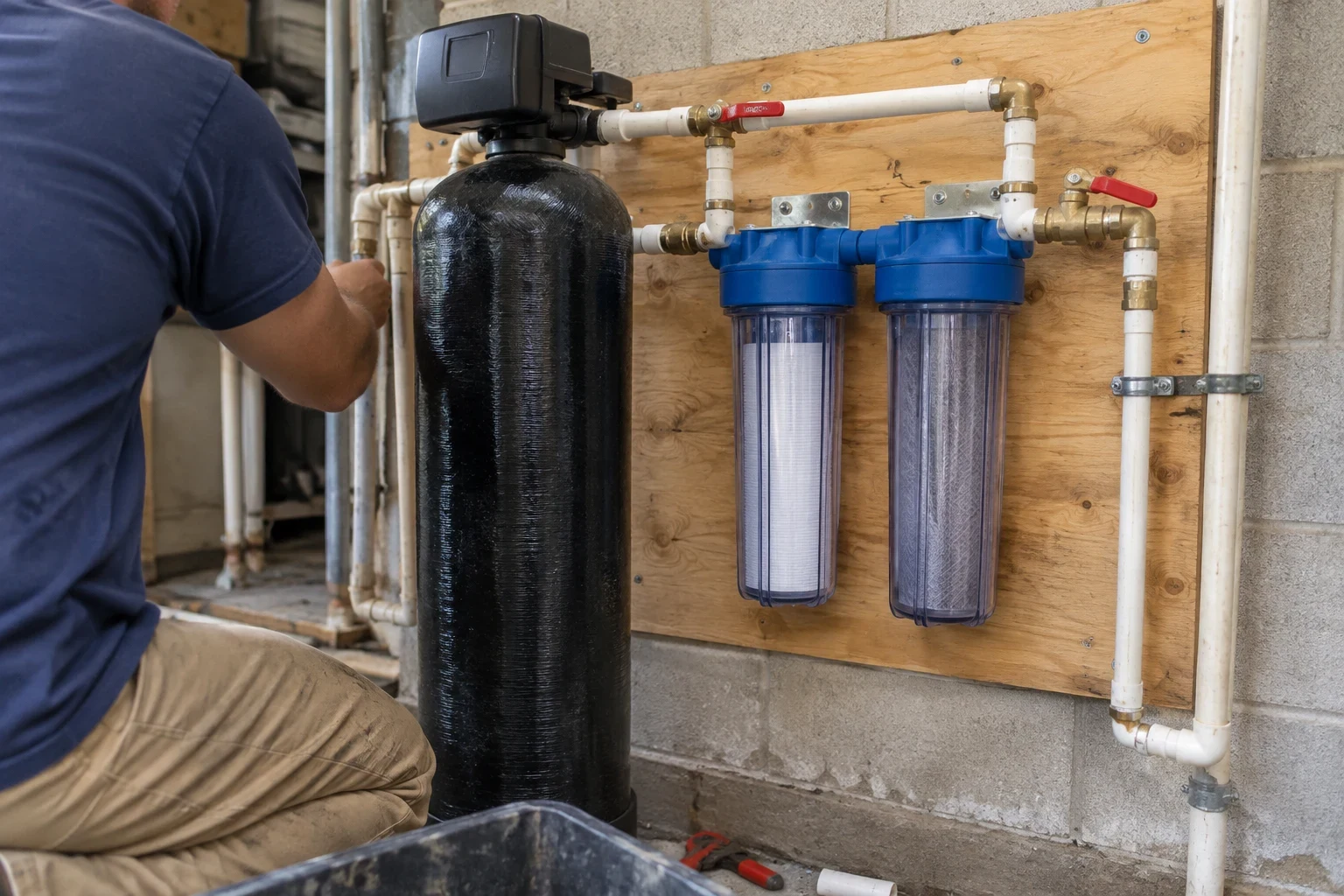
The system is a tank, usually packed with carbon, installed on the main line before the water branches out through the house. Water passes through it once, and every tap downstream gets the same treated water. The main thing it does is strip out the chlorine taste and smell that city water carries. It also traps sediment and a few other compounds that carbon grabs well.
It's a good choice when the chlorine smell follows you into the bathroom and the laundry, or when you'd like filtered water at more than one tap. If all you want is better water for drinking and cooking, we'll tell you that straight and steer you toward an under-sink reverse osmosis unit. White crust on faucets and showerheads comes from hardness. A carbon filter does nothing for it, and a water softener is what fixes that.
Before any work begins, we write down what we're putting in and why each part is there. You get the whole scope and price ahead of time, and the bill on install day is the same number.
What You Get With the Install
A tank sized for your household
We look at how many bathrooms you have and how many people tend to use water at the same time. A properly sized tank keeps the shower strong while the dishwasher runs.
Media matched to your supply
Regular carbon does a good job on chlorine. If your utility uses chloramine instead, we fill the tank with catalytic carbon made for that. The Chlorine & Chloramine Removal page covers how the two differ.
Sediment cartridge up front
A small cartridge before the tank traps sand and bits of rust. That keeps the carbon working longer, and you can change the cartridge on your own.
A bypass plus two shutoffs
We fit a bypass so the house still has water while the system is being serviced. Shutoff valves go in on the inlet and outlet sides.
Sun cover for outdoor tanks
Around here, a lot of main lines enter the house outdoors. If your tank ends up outside, we cover it so the sun doesn't bake the tank and control head.
Help after the install
We stick around for maintenance, filter replacements and service calls. The number you used to reach us the first time still works.
When Your Home Is a Good Fit
Bathroom smells like a pool
Hot water releases more chlorine into the air. A filter at the kitchen sink does nothing for that shower smell.
Skin and hair feel dry
A lot of people say their skin and hair feel better once the chlorine is gone from their bath and shower water.
Too many little filters
Pitcher filter, fridge cartridge, a filter on the showerhead. A single tank at the main line can take the place of all of them.
Specks in faucet screens
Sand or rust bits building up in aerators mean sediment is getting through. A cartridge ahead of the tank catches it first.
Taste that comes and goes
Water that's fine one week and off the next gets more consistent with filtration running all the time.
How the Job Runs
- 1
A phone conversation first
You tell us what's bothering you about your water and a little about the house. We'll ask how many bathrooms you have, what your pipes are made of and where the main line enters.
- 2
A visit to see the plumbing
We look at the main line, the shutoff valve and the room we have for the tank. Copper, CPVC and PEX each connect their own way, so we write down which one you've got.
- 3
Your quote on paper
Equipment, media, plumbing labor and price are listed item by item. Take your time deciding. What's on that page is what you pay.
- 4
Installation
We turn off the water, cut in at the main line, set the tank and pre-filter, then hook up the bypass. In most homes the water is off for a few hours.
- 5
Rinse, inspect and tidy
We run water through the fresh carbon until the fines are gone and it comes out clean. Then we check each fitting for drips, walk you through the bypass and cartridge, and clean up the work area.
What Changes the Cost
Every house is plumbed a little differently, so we don't quote a number over the phone before seeing your setup. These are the things that move the price. You'll find each of them listed separately on the written quote we hand you.
- How big the tank is
- More bathrooms and more people mean a larger tank with more media inside. A smaller tank costs a little less, but the trade-off is weak water flow when two showers run at once.
- Which media goes in
- Catalytic carbon, the type that handles chloramine, costs more than standard carbon. We only use it when your water supply calls for it.
- Getting to the main line
- If the main line runs through the garage, the work goes quickly. If it's hidden behind drywall or comes up through a slab, it takes more time. The size of the pipe and what it's made of also matter.
- Add-ons you choose
- Adding a softener next to the filter, or running a separate unfiltered line for irrigation, takes extra parts and labor. Each one gets its own price so you can take it or leave it.
- Tanks that sit outside
- A tank set outdoors needs a cover and sometimes a pad underneath. The charge is small, and it's written down along with the rest.
Common Questions About Whole-Home Filters
Something not covered here? (813) 798-6672
Is my water pressure going to drop?
It shouldn't, as long as the tank fits your home. Pressure loss happens when a small tank has to keep up with several fixtures running together. That's why we size by bathrooms and fixtures, not by a one-size model.
Will this take care of hard water too?
No. Carbon pulls out chlorine and the compounds behind bad taste and odor, but it leaves the minerals that cause scale alone. For scale, our Water Softeners page covers what helps. Plenty of homes run a softener and a filter together.
Should I add reverse osmosis for drinking water?
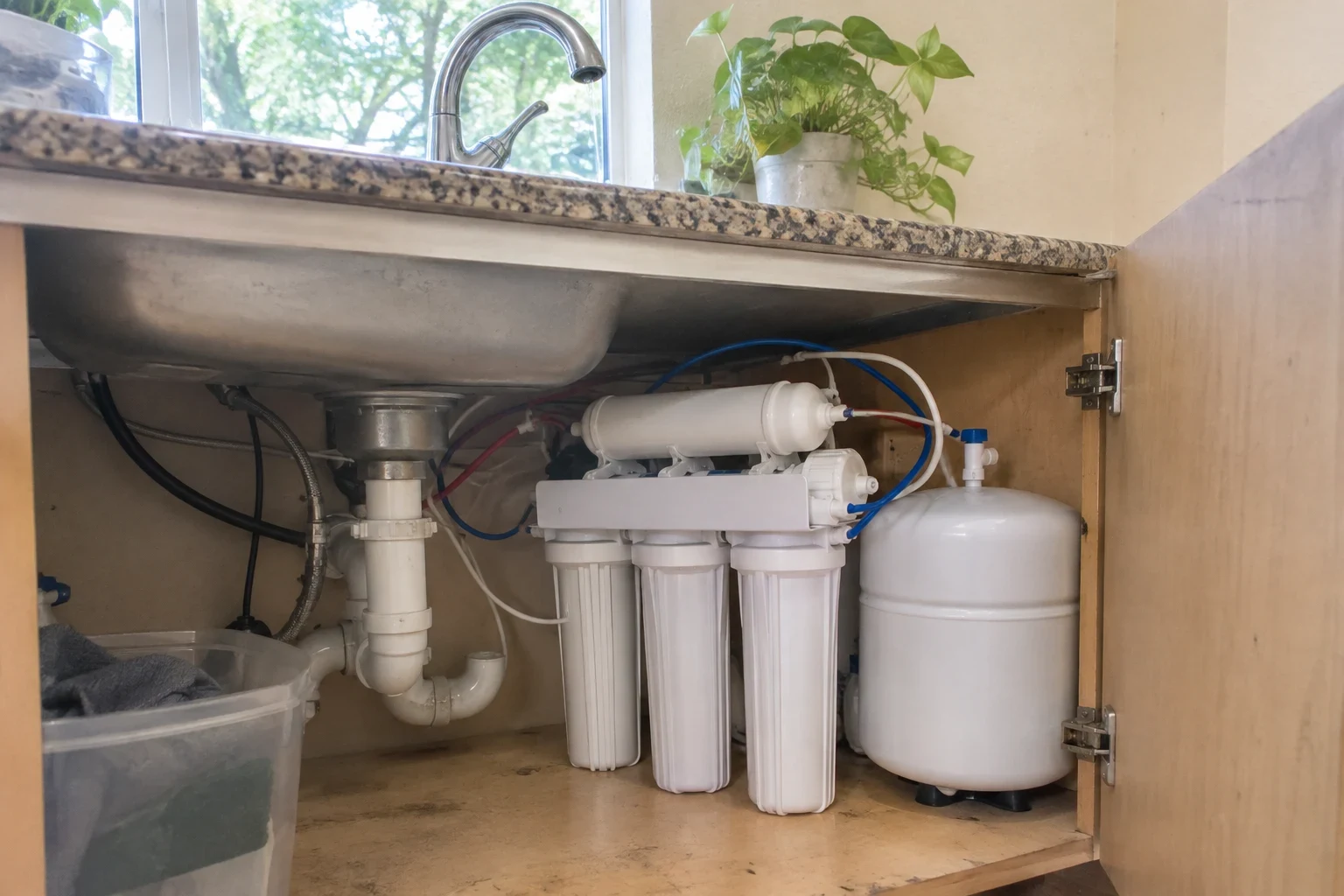
That's up to you. A lot of people find the filtered water at the kitchen tap is all they want. If you'd like another layer for drinking and cooking, an under-sink reverse osmosis unit takes it further and pairs well with a whole-home filter.
What maintenance does it need?
Plan on swapping the sediment cartridge every few months, depending on what your water carries. The carbon in the tank goes years before it needs replacing. When it's time for either, we're there to help with maintenance and filter changes.
Can the sprinklers and hose bibs skip the filter?
Usually, yes. When the plumbing allows, we connect the outdoor lines before the tank so lawn water isn't using up your carbon. That work is priced as its own item on the quote.
Let's Look at Your Setup
Tell us what's off about your water and where the pipes run in your house. We'll stop by to see it, then give you the full scope and price in writing before any equipment goes in.