ServicesWater Softeners
Water Softeners in Temple Terrace
Hard water leaves chalky rings on showerheads, haze on your glasses and sediment piling up inside the water heater tank. We put in softeners matched to your hardness and the way your household uses water, and you see the scope and price on paper before any pipe gets cut.
How Softening Works and Who It Helps
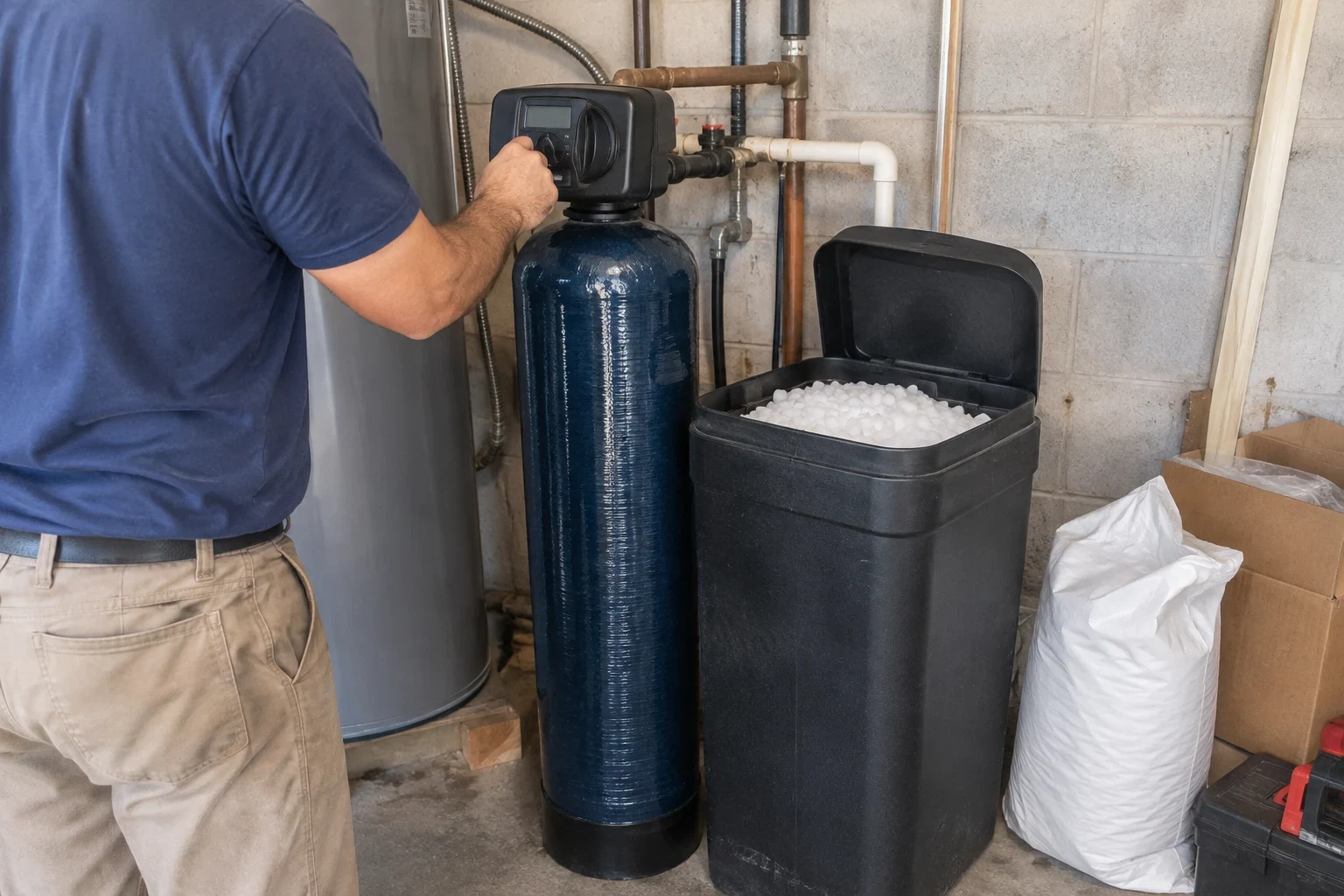
A softener holds a tank full of small resin beads. Water flows through them, and the beads catch calcium and magnesium while releasing a small amount of sodium or potassium. Once the beads are loaded up, the unit flushes them with brine from the salt tank and they go back to work. The water leaving the unit rinses clean and quits building scale on fixtures, glassware and heating elements.
Keep in mind a softener and a filter do different jobs. Softening won't touch chlorine taste or odor, and it's not built to treat drinking water. If those are your complaints, whole-home filtration or reverse osmosis probably fits better, and we'll say so plainly. Much of the Tampa Bay area draws water from limestone, so hardness is common and softeners often pay off here. Even so, we want your hardness number before we recommend one.
What Your Softener Install Includes
- Sizing to your home
- We size from your hardness number, the number of people under your roof and the count of bathrooms. An undersized unit regenerates constantly and burns through salt. An oversized one just costs you more than it needs to.
- Bypass valve
- With a bypass, the softener can be shut off while water keeps flowing to the rest of the house. That makes service and salt refills much simpler.
- Drain and overflow lines
- Every regeneration flushes salty rinse water out of the unit. We run that line to a drain and leave an air gap above the opening, so waste water can't siphon back into the softener.
- Setup and programming
- We set the hardness, the regeneration schedule and the salt dose to fit your household. Then we show you how to check those settings and add salt yourself.
- Cleanup and walkthrough
- We haul away boxes, packing and any old parts we removed. Before leaving, we run taps through the house and check every fitting for drips.
Signs Your Home Could Use a Softener
White crust on fixtures
Chalky buildup around faucets and showerheads is mineral scale. You clean it off and it returns within a few days.
Spotty dishes and glass
Glassware comes out of the dishwasher cloudy. Shower doors get water spots again the day after you wipe them.
Soap that won't lather
Hardness minerals bind up soap. You use extra shampoo and laundry detergent, and your skin still feels coated after a shower.
Crackling from the water heater
Popping or rumbling while the tank heats usually means mineral sediment has collected on the bottom. The burner or element has to run longer to heat through that layer, and the heater wears out early.
Stiff, dull laundry
Towels get rough and colors fade sooner when minerals stay locked in the fabric.
Clogged aerators and showerheads
Low pressure at just one tap is often scale jammed into the screen or spray holes.
What Moves the Price
No two installs cost exactly the same, and we won't guess over the phone. The price depends on the unit you need and how hard it is to get it into your plumbing. All of it goes on the written quote before we start.
Grain capacity
Harder water and bigger households need a larger resin tank. Larger units cost more up front but regenerate less often.
Existing loop or new piping
Some homes already have a softener loop stubbed out. Others need new piping run to the main line, which adds time and material.
Drain and power access
A drain and outlet close by keeps things simple. Long drain runs or adding an outlet raise the labor.
Removing an old unit
If a worn-out softener is already in place, taking it out and hauling it away is part of the job. Our page on water softener and filtration system replacement covers that work in more detail.
Pairing with filtration
If you also want chlorine taste gone, a carbon stage can go in ahead of the softener. We price it as its own line so you can decide.
How the Job Goes
- 1
Phone conversation
Walk us through what you're seeing and how many people are in the house. Have a recent hardness result or your utility's water report handy if you can. Then we set a time to stop by.
- 2
Look at your plumbing
We locate where the main line comes in, check whether a softener loop is already roughed in and look for a nearby drain and outlet. Plenty of Florida houses put that spot in the garage, though every home is a little different.
- 3
Written quote
Unit size, parts, labor and any extras each get their own line. Anything missing from the quote won't appear on your bill. Work starts only after you sign off.
- 4
Install day
First we shut off water to the house. Then we plumb in the bypass and softener, run the drain hose and fill the brine tank with salt. Most installs take part of a day, and water comes back on once every joint holds pressure.
- 5
Follow-up support
After the install, you still have us: ongoing customer support for maintenance, filter replacements, and service needs. When a setting needs adjusting a few weeks in, just pick up the phone.
Water Softener Questions
Will softened water taste salty?
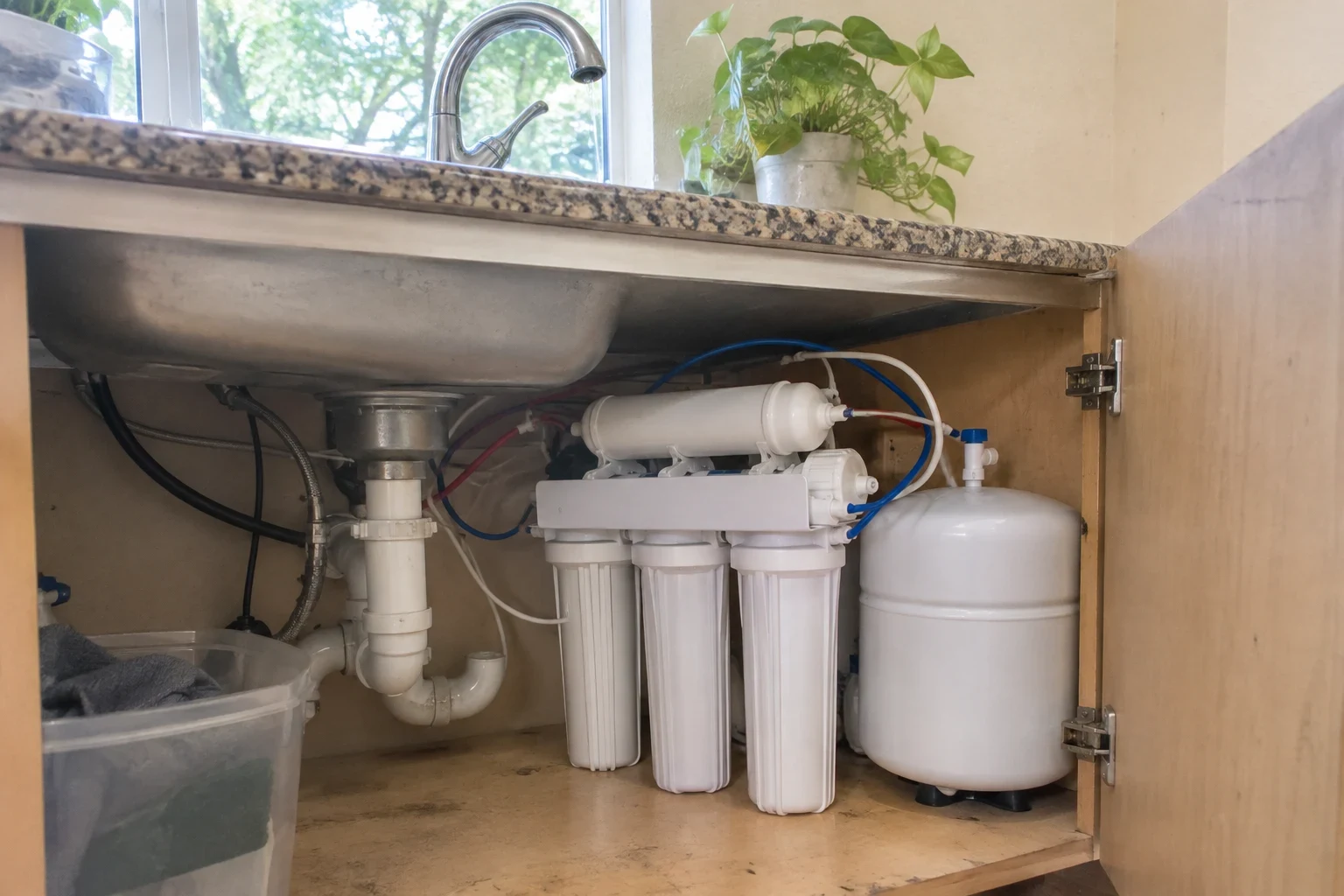
Most people can't tell. The resin swaps hardness minerals for a small amount of sodium, so the harder your water starts out, the more sodium ends up in the glass. If you'd rather drink none of it, a reverse osmosis system under the kitchen sink takes it back out.
Does a softener get rid of chlorine?
No. A softener only handles calcium and magnesium. For chlorine taste and smell, look at chlorine and chloramine removal or whole-home filtration. Either can be plumbed on the same line as your softener.
How much salt will I go through?
Salt use depends on three things: the hardness of your water, the gallons your household runs each day and the valve settings. A properly sized unit regenerates less often and uses less salt than an undersized one. We'll show you how to check the brine tank so you know when to add a bag.
Do I need my hardness checked first?
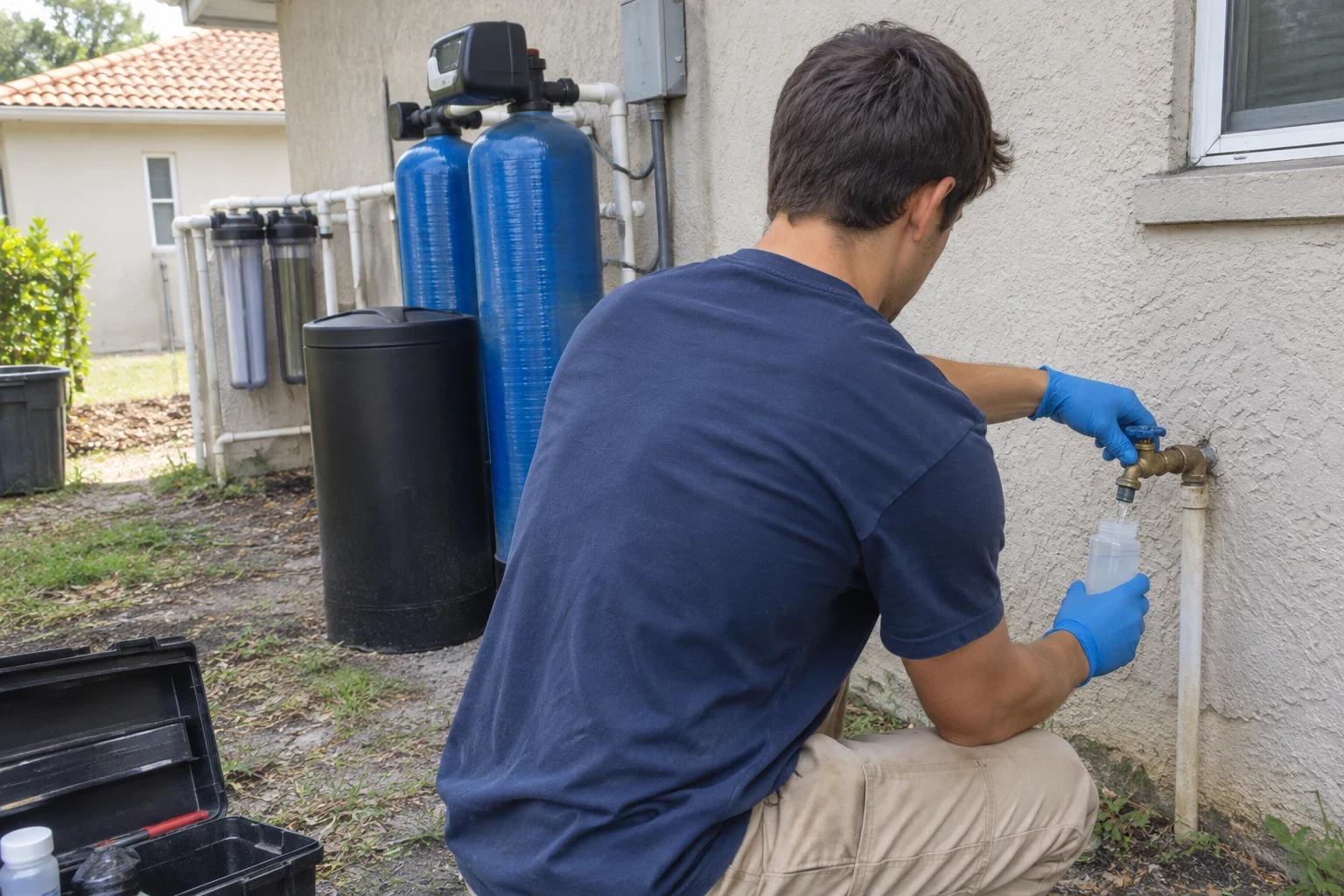
Yes. We don't size a softener without a hardness number. Your utility's yearly water quality report lists one, or you can share a recent result you already have. If the number says your water is fairly soft, we'll tell you a softener isn't worth the money.
What upkeep does a softener need?
Keep the brine tank stocked with salt and break up any hard crust that forms on top. Every so often the control valve and resin need a look. Our water softener repair and maintenance service covers that when it's due.
Get Your Softener Quote in Writing
Tell us about your water and your home. We'll come look, then hand you a quote that lists every part and every hour before any work starts.