ServicesWell Water Treatment
Well Water Treatment in Temple Terrace
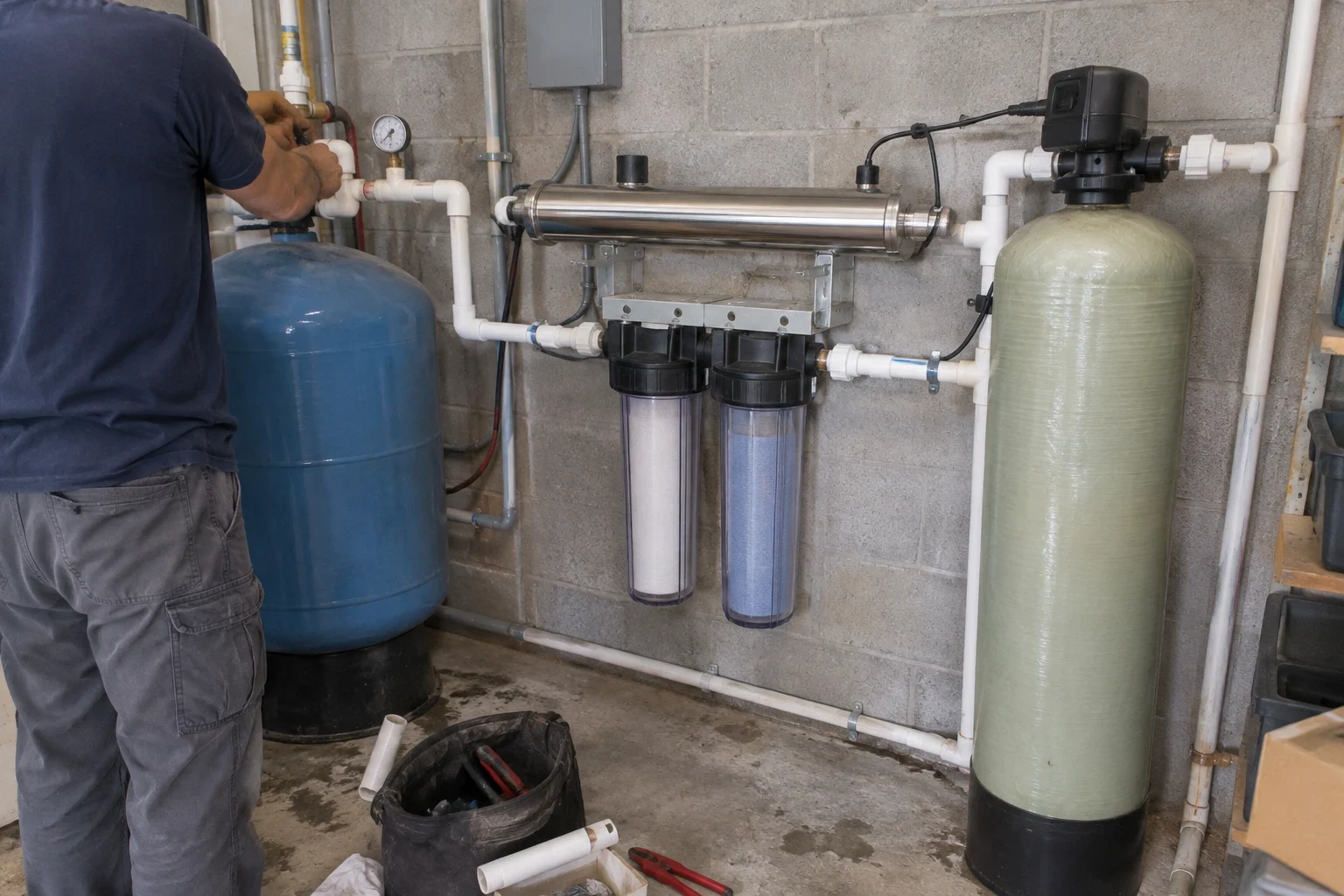
We set up treatment systems for private wells that remove sulfur smell, iron, sediment and hardness before water reaches your taps. Before we cut into a single pipe, you see a written breakdown of every tank and filter, the job it does and its price.
What well water treatment does for your home
A private well gives you water the city never touches. That also means nobody else is treating it. Wells around here often bring up hydrogen sulfide, which smells like rotten eggs, along with dissolved iron, fine sand and minerals picked up from limestone. None of that shows up all at once. It builds as orange rings in the toilet, a smell in the shower and a white crust on fixtures.
We match the treatment to the problem. A sediment filter for sand. Air injection or an oxidizing filter for iron and sulfur. A softener only if hardness is really the issue. Sometimes UV for added protection against bacteria. Most homes need two or three of these, not all of them.
Before any work, you get a written list that names each stage, why it is there and what it costs to run. If a piece of equipment is not needed, it stays off the list.
What the job includes
- A look at your current setup
- We check your pressure tank, the pipe size coming off it, where a drain line can go and whether there is power nearby. That decides where the system sits and what it needs.
- Sediment filtration
- A first-stage filter catches sand and grit from the well. It protects every stage after it and keeps valves from wearing out early.
- Iron and sulfur removal
- We use air injection or an oxidizing media tank to turn dissolved iron and sulfur into particles the filter can trap. The tank backwashes on its own schedule to flush them out.
- Softening or UV when it fits
- If hardness is leaving scale, we add a softener after the iron stage. If you want protection against bacteria, a UV unit goes last in line.
- Bypass and tagged valves
- We fit a bypass around the equipment so water still reaches the house while a part is being serviced. Each valve gets a tag, so you can tell at a glance which one to turn.
- Startup and walkthrough
- We sanitize the lines, run a full cycle and show you how to read the control head and when filters need changing.
Signs your well water needs treatment
Rotten egg smell
That is hydrogen sulfide. It is often worse with hot water and first thing in the morning, after water has sat in the lines.
Orange or brown stains
Iron leaves rust marks on tubs, toilets, laundry and the side of the house where sprinklers hit.
Grit in faucet screens
Sand from the well clogs aerators and wears out washing machine valves and toilet fill valves.
White crust on fixtures
Hard water leaves scale on shower heads, glass doors and inside the water heater.
Black slime in the toilet tank
Iron and sulfur bacteria grow where well water sits. It is a sign the water needs more than a basic cartridge filter.
What moves the price of well water treatment
No two wells are the same, so we price after we see yours. Every line item is on paper before you decide. These are the things that change the number most.
What is in the water
Sulfur alone may need one stage. Sulfur plus heavy iron plus hardness can need three. Each problem you treat adds equipment.
Flow rate and household size
Tanks are sized to how much water your home uses at once. More bathrooms and a bigger family mean larger tanks.
Plumbing and drain access
If there is no drain or outlet near the pressure tank, we have to run one. Tight spaces or old galvanized pipe add labor.
Equipment you already have
A working softener or sediment housing may stay in place. A failed one may need to come out first.
Ongoing upkeep
Filters, media and UV lamps all need replacing on a schedule. We list those costs in the quote so the running cost is clear up front.
How a well water job runs
- 1
Phone call
Tell us what you see, smell or taste, and share any past water reports you have. We set a time to come look at the well setup.
- 2
Site visit and written quote
We look at the pressure tank, plumbing, drain and power. Then you get a written quote listing each stage, the parts, the labor and any plumbing changes. Nothing is added later without your okay.
- 3
Install day
We shut off the well pump, tie the new equipment into the line just past the pressure tank and route the backwash drain. Then we set the cleaning schedule on the control head. Most jobs take part of a day, and your water is off only during the tie-in.
- 4
Startup and handoff
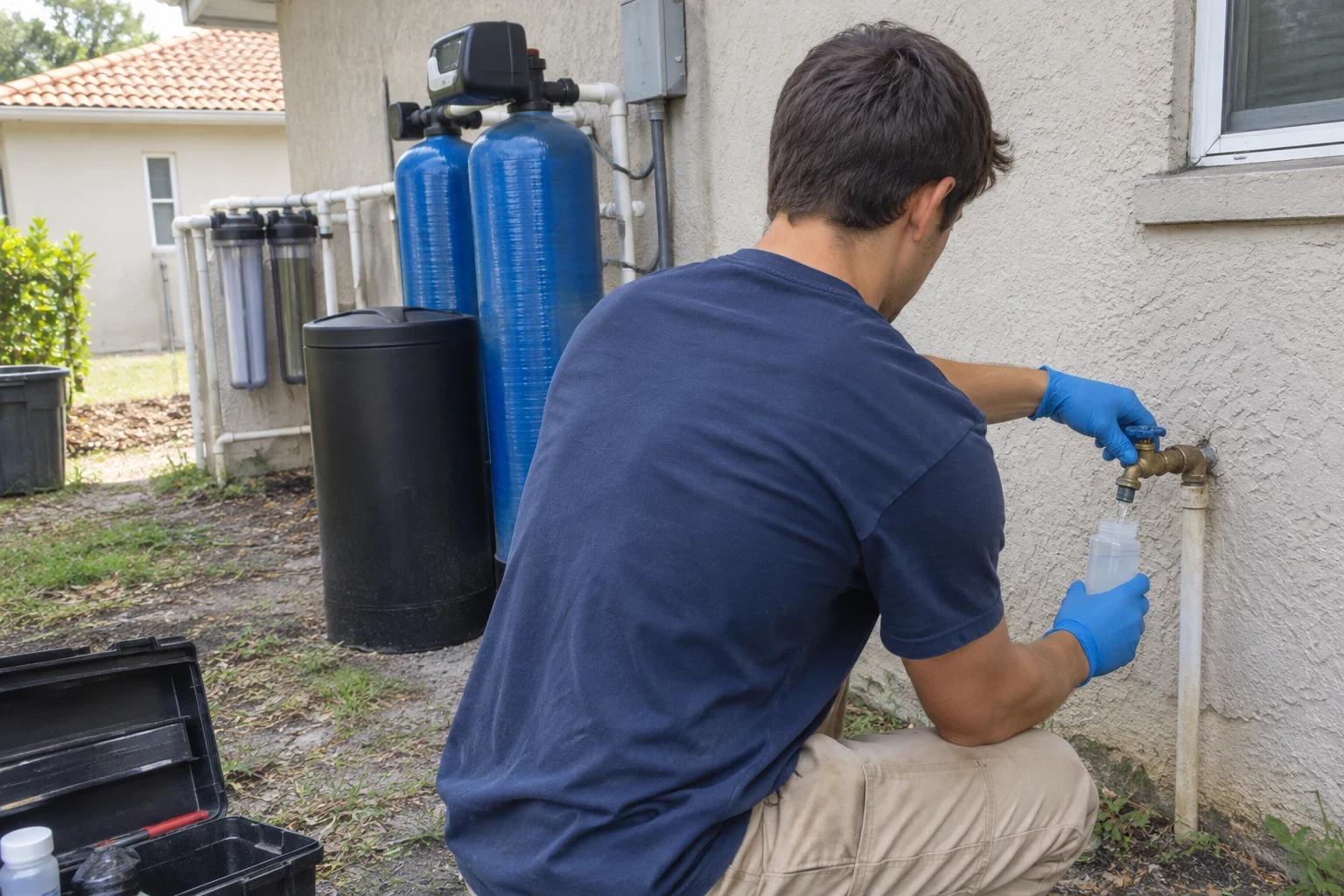
We flush and sanitize the lines, run the system through a cycle and check for smell and color at the taps. You get a quick lesson on bypass valves and filter changes before we leave.
Well water treatment questions
Will this get rid of the rotten egg smell?
In most cases, yes. Air injection or an oxidizing filter is built for hydrogen sulfide. If you only notice the smell when the hot tap runs, the water heater may be the source rather than the well. A worn anode rod can react with the water and make that odor, and we will point you there instead of selling you equipment you do not need.
Will my water pressure drop?
A system sized to your home's flow should not cause a noticeable drop. Undersized tanks and clogged filters are what cause low pressure. We size the tanks to your fixtures and show you when to change filters.
Does the system need power and a drain?
Most iron and sulfur systems backwash, so they need a drain line and a standard outlet. UV units also need power. If neither is close to your pressure tank, running them is listed in your quote.
How much upkeep is there?
Sediment filters get changed every few months, depending on how much sand your well sends up. Media tanks last years with backwashing. Once the system is in, we stay on hand to help with upkeep, swap out filters and take care of service calls when something needs a look. You always have someone to phone.
Do I still need reverse osmosis for drinking water?
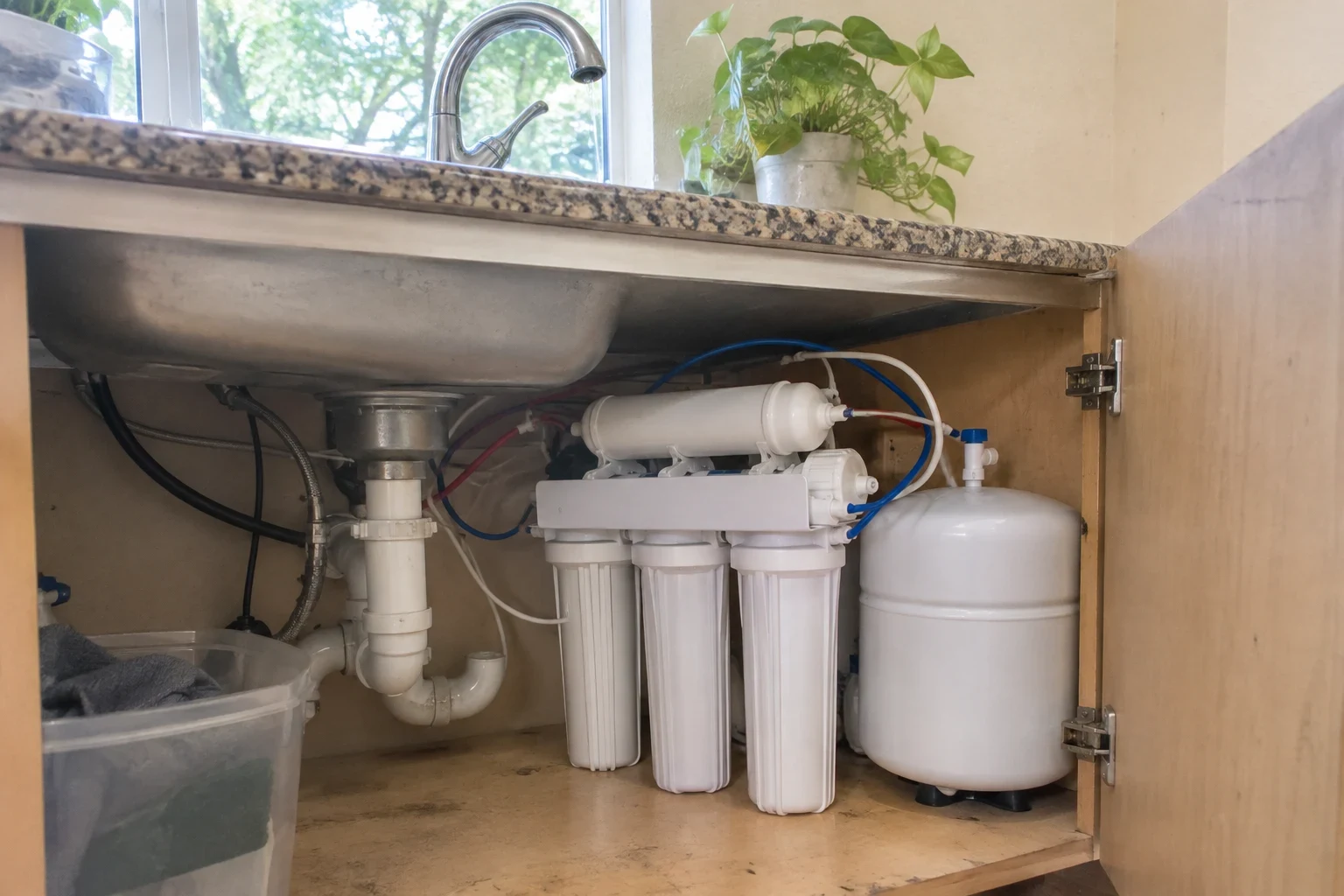
Not always. Whole-home treatment fixes smell, stains and scale. If you want extra cleanup on the water you drink and cook with, an under-sink reverse osmosis unit is a good add, and we can price both at once.
Can you work with the softener I already have?
Often. If it is in good shape, we put the iron and sulfur stage ahead of it, which protects the resin. If it is worn out, we cover that under water softener and filtration system replacement.
Get clean water from your well
Give us a rundown of what your well water is doing, like the smell, the orange stains or the sand in your faucet screens. We will set a time to look at your pressure tank and plumbing. Then every stage and its price goes on paper before anything is installed.